Cash Flow vs Profit: Why Busy Tradies Still Go Broke Despite Strong Sales
You're booked solid for weeks, your phone keeps ringing with new jobs, and your profit and loss statement looks great. So why does your bank account feel empty when bills are due? This frustrating situation happens to tradies every day, and it's one of the biggest reasons successful businesses suddenly find themselves in trouble.
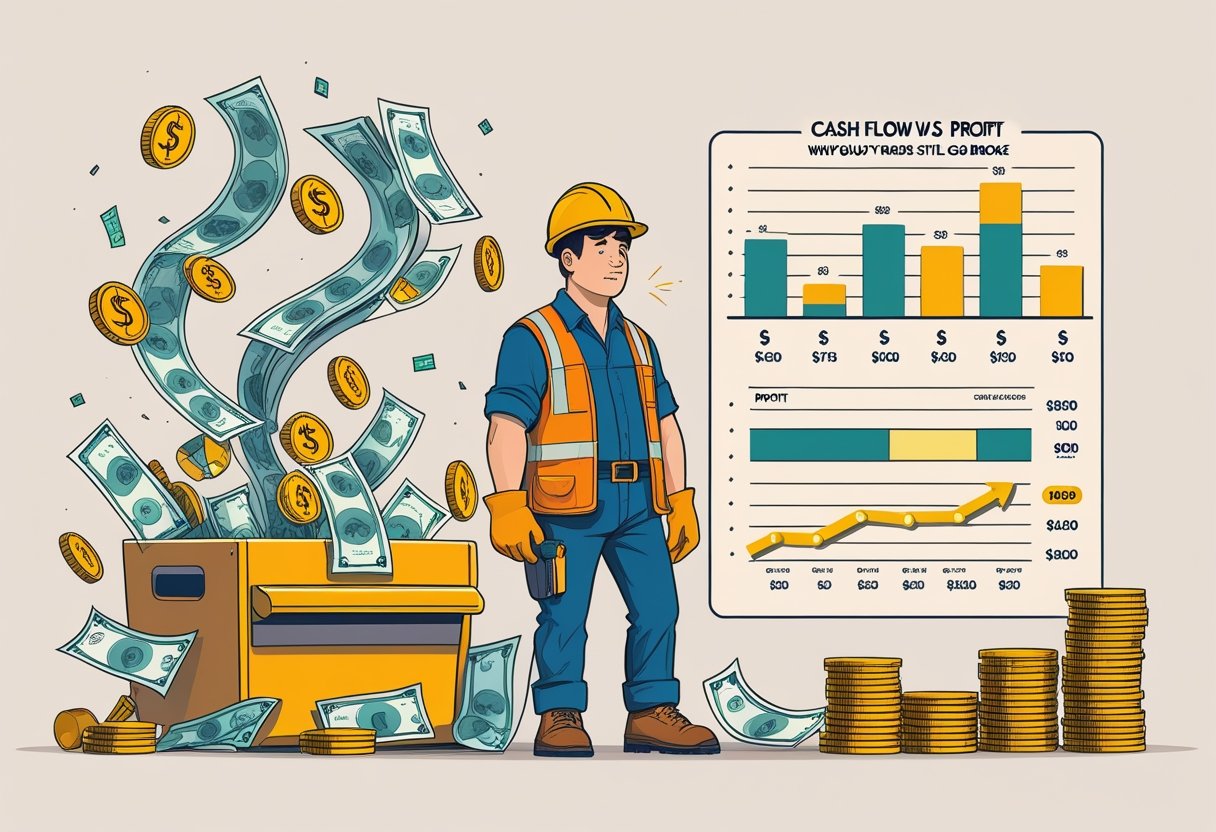
Profit shows how much money you've earned on paper, but cash flow shows the actual money moving in and out of your bank account. You can have thousands of dollars in profit from completed jobs, but if customers haven't paid their invoices yet, you still can't cover payroll, suppliers, or that new equipment you need. The timing of when money comes in versus when it goes out makes all the difference between a business that survives and one that struggles.
Understanding this gap between profit and cash flow is critical for keeping your tradie business healthy. This article will show you exactly why this happens and what you can do to avoid the cash crunch that catches so many busy tradies off guard.
Key Takeaways
Profit measures earnings on paper while cash flow tracks actual money in your bank account
Late customer payments and poor timing between income and expenses cause most cash problems for tradies
Better invoicing practices, expense timing, and keeping a cash buffer prevent profitable businesses from going broke
Understanding Cash Flow and Profit

Many tradies mix up profit and cash flow, but they measure different things. Profit shows if your business is making money on paper, while cash flow tracks the actual money moving through your bank account.
What Is Cash Flow?
Cash flow is the actual money coming into and going out of your business bank account. When a client pays an invoice, that's cash coming in. When you pay for materials or your apprentice's wages, that's cash going out.
You can have positive cash flow when more money comes in than goes out. Negative cash flow happens when you're spending more than you're receiving. This is real money you can touch and use right now.
Cash inflows include:
Customer payments for completed jobs
Deposits or upfront payments
Loan proceeds
Money from selling equipment
Cash outflows include:
Materials and supplies
Wages and superannuation
Vehicle costs and fuel
Insurance and licensing fees
Tool purchases
Rent for your workshop
What Is Profit?
Profit is what's left after you subtract all your business expenses from your total revenue. It's an accounting measure that appears on your profit and loss statement. Your accountant calculates this number to show if your business is making or losing money over a period.
You earn revenue the moment you invoice a client, even if they haven't paid yet. Your profit calculation includes this unpaid invoice as income. This is why your profit and loss statement might show you made $50,000, but your bank account tells a different story.
Profit doesn't account for timing. It ignores when money actually moves.
Key Differences Between Cash Flow and Profit
Cash Flow Profit Shows actual money in the bank Shows accounting income minus expenses Changes daily Calculated monthly, quarterly, or yearly Includes loan payments Excludes loan principal payments Tracks when payments are received Records income when invoiced Affected by payment terms Not affected by payment terms
You can be profitable but still run out of cash. This happens when customers take 60 days to pay invoices, but you need to pay suppliers within 14 days. Your profit and loss shows the income, but your bank account is empty.
The timing of money movement matters more than the accounting profit. A tradie business with $100,000 in profit can go broke if that money is tied up in unpaid invoices and can't cover this week's payroll.
Common Cash Flow Challenges for Tradies

Tradies often face three main problems that drain their bank accounts: clients who pay late, having to buy materials before getting paid, and work that slows down during certain times of the year.
Late Payments and Slow Invoices
When you finish a job and send an invoice, you might wait 30, 60, or even 90 days to get paid. During that time, you still need to pay your bills, buy fuel, and cover other expenses.
Many tradies don't send invoices right away after completing work. You might wait until the end of the week or month to do paperwork. This delay adds even more time before money hits your account.
Some clients simply don't prioritize paying their tradies on time. They might pay other bills first or forget about your invoice completely. Without a clear payment system or follow-up process, you're left chasing money instead of doing billable work.
This gap between finishing jobs and receiving payment creates a cash flow problem even when you're busy and profitable on paper.
High Upfront Costs
You need to buy materials and supplies before you start most jobs. These costs come out of your pocket first, weeks or months before the client pays you.
Large projects require even bigger upfront investments. You might need to order specialty items, rent equipment, or hire subcontractors. All of these expenses drain your cash reserves before you complete any work.
The bigger the job, the bigger the cash flow strain. A $20,000 project might require $8,000 in materials upfront. If you're running multiple jobs at once, you could have tens of thousands tied up in costs you haven't been paid for yet.
Your bank account can look empty even though you have plenty of work booked and will eventually make good profit.
Seasonal Work and Income Fluctuations
Construction and trade work often slows down during certain months. Winter weather, holiday periods, or industry-specific quiet times can cut your income significantly.
You still have fixed costs during slow periods. Rent, insurance, vehicle payments, and tool financing don't stop just because work dried up. These ongoing expenses eat through any money you saved during busy months.
Some tradies make most of their annual income in just 6-8 months. If you don't plan for this pattern, you'll run out of cash during the slow season. You need enough buffer to cover 2-3 months of expenses without new income coming in.
How Profit Can Mask Cash Flow Problems
Your profit and loss statement might show healthy numbers while your bank account sits empty. This disconnect happens because profit calculations don't account for payment timing, upfront costs, or how money actually moves through your business day to day.
The Illusion of Profit on Paper
Your accounting software records a sale the moment you invoice a client, not when they pay you. This means your profit looks great on paper, but you won't see that money for 30, 60, or even 90 days.
A tradie business might show $50,000 in profit for the quarter. But if $40,000 of that sits in unpaid invoices, you only have access to $10,000 in actual cash. You still need to pay your suppliers, employees, and fuel bills right now.
The gap between recorded profit and available cash creates a dangerous blind spot. You might think you're doing well based on your profit figures, but you can't pay your bills with invoices that haven't been paid yet.
Hidden Operational Costs
Many business expenses don't show up on your profit calculation the way you might expect. Loan repayments are a perfect example. Only the interest portion appears as an expense on your profit and loss statement, but you still need cash to pay back the principal amount.
Equipment purchases work the same way. You might pay $30,000 upfront for a new van, but your profit statement only shows the depreciation expense spread over several years. That full $30,000 still leaves your bank account immediately.
Common hidden costs include:
Loan principal repayments
Equipment and vehicle purchases
GST payments to the tax office
Owner drawings and dividends
Stock and materials bought in advance
Impact of Growth on Cash Flow
Fast business growth actually makes cash flow problems worse, not better. When you take on more jobs, you need to buy more materials, hire more staff, and cover more expenses before clients pay their invoices.
You might land a $100,000 commercial job that will generate great profit. But you need to pay $40,000 for materials upfront, cover two months of labor costs, and wait 60 days for payment after completion. That's thousands of dollars out of your pocket before you see a cent back.
Every new job requires cash upfront while profit only appears later. The faster you grow, the more cash you need to fund that growth.
Why Busy Tradies Still Go Broke Despite Profits
Many tradies run a business that looks successful on paper but struggle to pay bills when they're due. The gap between showing profit and having actual cash creates problems that catch hardworking business owners off guard.
Mismanagement of Finances
You might confuse revenue with profit when looking at your bank account. If you invoice $15,000 this month, that doesn't mean you've earned $15,000. You need to subtract materials, fuel, insurance, tool repairs, and other costs first.
Many tradies don't separate business money from personal spending. When cash sits in one account, it's easy to spend money that should cover upcoming tax bills or supplier invoices.
Poor record keeping makes this worse. Without tracking what you spend daily, you can't see where your money actually goes. You might think you're profitable when most of your revenue gets eaten up by small expenses that add up over time.
Late invoicing also creates problems. When you finish a job but wait weeks to send the invoice, you're essentially giving your customers an interest-free loan while your own bills pile up.
Overinvesting in Equipment or Staff
Buying a new ute or expensive tools feels like progress. But spending $60,000 on equipment when you don't have three months of expenses saved puts you at risk.
You might hire extra staff because work is busy right now. Fixed costs like wages don't disappear when work slows down. If you're paying two employees $1,500 per week each, that's $12,000 per month you need to cover regardless of how many jobs you have booked.
Equipment finance and leases lock you into monthly payments. These commitments reduce the cash you have available for unexpected expenses or slow periods. One quiet month can put you behind on everything else.
Neglecting Cash Flow Forecasting
Most tradies don't know how much money they'll have in their account next month. You need to track when payments arrive and when bills are due.
Payment terms create timing gaps. You might complete $20,000 worth of work but offer 30-day payment terms. Your suppliers expect payment in 14 days. This leaves a two-week gap where you need cash to cover the difference.
Without a forecast, you can't see problems coming. You might book a profitable job but lack the cash to buy materials upfront. Or you might have five invoices unpaid when your insurance premium is due.
Track these key dates:
When customer payments are due
When supplier invoices must be paid
When tax payments are due
When loan or lease payments come out
Effective Strategies for Managing Cash Flow
Managing cash flow requires specific actions that protect your business from running out of money. The right payment terms, regular tracking of money in and out, and emergency savings create stability even during slow periods.
Implementing Payment Policies
Set clear payment terms before you start any job. Request a deposit of 30-50% upfront to cover materials and initial labor costs. This protects you from fronting all the money yourself.
Invoice immediately when work is complete or when you reach agreed milestones. Don't wait until the end of the month. The faster you send invoices, the faster you get paid.
Key payment terms to include:
Payment due within 7-14 days
Late payment fees of 1-2% per month
Accepted payment methods (bank transfer, card, etc)
Clear description of work completed
Offer small discounts for early payment, like 2% off if paid within 5 days. Make it easy for clients to pay by accepting multiple payment methods, including online transfers and card payments.
Monitoring Receivables and Payables
Check your accounts weekly to see who owes you money and what bills you need to pay. Use a simple spreadsheet or accounting software to track every invoice and payment deadline.
Contact clients as soon as an invoice becomes overdue. Call them within 48 hours of a missed payment. Most clients simply forgot and will pay quickly when reminded.
Track your payables with the same attention. Know exactly when supplier bills are due. Pay on time to maintain good relationships, but don't pay early unless you get a discount. This keeps your cash available for immediate needs.
Create a 30-day cash flow forecast that shows expected income and expenses. Update it weekly based on actual payments received and bills paid.
Building a Financial Buffer
Keep enough cash in your business account to cover 1-3 months of operating expenses. This emergency fund protects you when clients pay late or work slows down.
Start small if you need to. Set aside 5-10% of each payment you receive into a separate savings account. Even $200 per week builds to over $10,000 in a year.
Your buffer should cover rent, insurance, vehicle costs, tools, and basic living expenses. Calculate your monthly must-pay expenses and use that as your target. Don't touch this money except for genuine emergencies or major cash flow gaps.
Practical Tools for Tracking Cash Flow and Profit
The right tools make it easier to see where your money actually is versus what your profit shows on paper. Good accounting software and regular cash flow statements help you spot problems before they become emergencies.
Using Accounting Software
Xero and MYOB are two popular options for Australian tradies. Both connect directly to your bank accounts and update automatically when money moves in or out.
These programs track invoices you've sent but haven't been paid yet. They also show bills you owe but haven't paid. This gives you a clear picture of your actual cash position, not just what you've earned on paper.
You can set up automatic reminders for overdue invoices. Most tradies lose track of who owes them money, and these reminders help you get paid faster. The software also creates reports that show your profit and your cash flow side by side.
Fathom is another tool that works with Xero or MYOB to create simple dashboards. You can see your numbers at a glance without digging through reports.
Creating and Analyzing Cash Flow Statements
A cash flow statement shows three things: cash from sales and customer payments, cash spent on business operations, and cash used for equipment or loan payments.
You should review this statement weekly or at least monthly. Look for patterns in when cash gets tight. Many tradies see low cash at the same time each month when rent, insurance, and wages all hit at once.
Compare your cash flow statement to your profit and loss report. If profit is up but cash is down, check how much customers owe you. You might need to tighten your payment terms or follow up on invoices faster.
The Importance of Professional Financial Advice
Getting expert help with your finances can prevent cash flow problems before they become serious. A qualified advisor helps you understand your numbers and plan for the future of your tradie business.
When to Seek Help
You should talk to a financial professional when you notice certain warning signs in your business. These include struggling to pay bills despite making sales, not understanding your financial reports, or feeling stressed about money most weeks.
A good accountant or bookkeeper can set up systems that track both profit and cash flow. They'll show you when money comes in and goes out. This matters because you need to know if you can pay next week's costs, not just if you made profit last month.
Many tradies wait too long to get help. They think professional advice costs too much. But the cost of going broke is much higher than paying for expert guidance.
Key signs you need professional help:
Bills are piling up while jobs seem profitable
You can't predict if you'll have enough money in two weeks
Tax time causes panic and surprises
Your business bank account balance keeps dropping
Long-Term Planning for Tradie Businesses
Professional advisors help you build plans that go beyond the next few months. They create cash flow forecasts that show what your business will look like in six months or a year. This lets you prepare for slow periods and make smart choices about buying equipment or hiring workers.
A financial advisor also helps with bigger goals like retirement planning or selling your business one day. They can show you how much money to keep in your business versus taking home as income.
Regular check-ins with an advisor keep you on track. Monthly or quarterly reviews help spot problems early when they're easier to fix. Your advisor becomes a partner who understands your business and helps you make decisions based on real numbers, not guesses.
Conclusion
You can run a profitable tradie business and still run out of money. The difference comes down to timing between when you earn profit and when cash actually hits your bank account.
Profit tells you if your business model works. Cash flow tells you if your business will survive.
Managing both matters for your success. You need to track when money comes in and goes out, not just what you've earned on paper. Send invoices quickly and follow up on late payments. Keep some cash in reserve for slow periods.
Three things to focus on:
Get paid faster by invoicing immediately after job completion
Know your cash flow pattern throughout the month
Build a buffer of at least one month's expenses
Your business depends on having cash available when bills are due. A job you completed last month doesn't help if the invoice won't be paid for another 30 days and your suppliers need payment today.
Review your profit and cash flow numbers every month. This simple habit helps you spot problems early and make better decisions about taking on new work or making purchases.
You don't need complex systems to stay on top of this. Track what's owed to you, what you owe others, and what's in the bank. These three numbers give you the full picture of your financial health.
